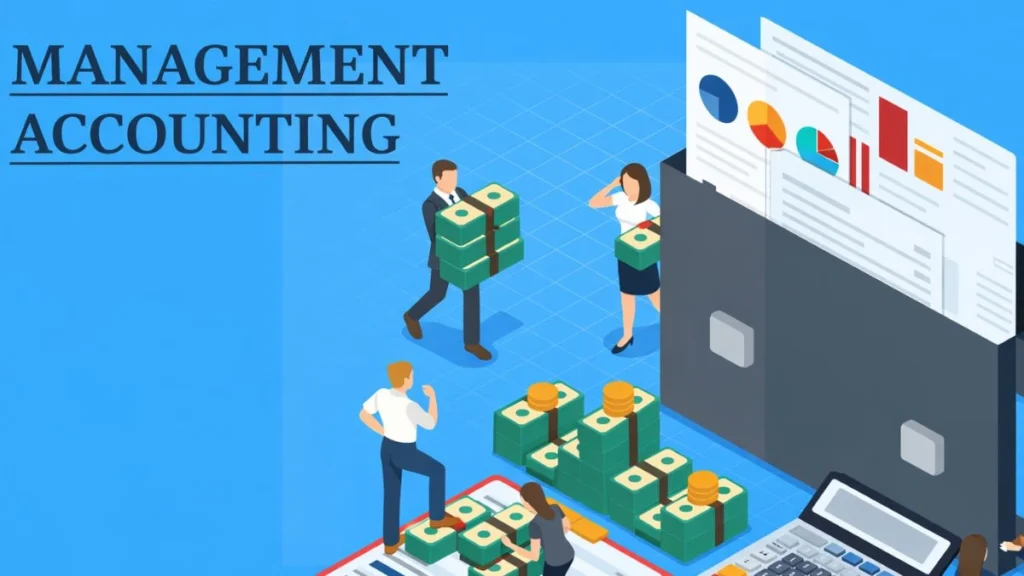

Businesses don’t succeed on guesswork. They succeed by making informed decisions, planning carefully, and controlling costs. Management accounting plays a key role in this process by providing useful financial and non-financial information to managers.
Unlike traditional accounting that looks at the past, management accounting focuses on the future. It helps leaders plan, analyze, and improve business performance.
What Is Management Accounting?
Management accounting is the process of collecting, analyzing, and using financial information to help managers make better decisions.
It answers questions like:
- How can we reduce costs?
- Which product is most profitable?
- Are we meeting our budget targets?
- What should our next business move be?
The information is prepared for internal use, not for external reporting.
Why Management Accounting Is Important
Management accounting helps businesses stay competitive and profitable.
Key benefits include:
- Better planning and budgeting
- Improved cost control
- Smarter decision-making
- Performance measurement
- Long-term business growth
Without management accounting, managers operate with limited visibility.
Who Uses Management Accounting?
Management accounting is used by:
- Business owners
- Managers and supervisors
- Executives and decision-makers
- Financial controllers
- Operations managers
Any role involved in planning or controlling business activities relies on management accounting.
Management Accounting vs Financial Accounting
These two branches serve different purposes.
Financial Accounting
- Focuses on past performance
- Prepared for external users
- Follows strict accounting standards
Management Accounting
- Focuses on future planning
- Prepared for internal use
- Flexible and decision-oriented
Both are important, but management accounting is more practical for daily decisions.
Main Objectives of Management Accounting
Management accounting aims to:
- Help plan business activities
- Control costs and resources
- Measure performance
- Support strategic decisions
- Improve efficiency and profitability
It turns raw numbers into actionable insights.
Key Functions of Management Accounting
Planning
Helps create budgets and forecasts for future activities.
Controlling
Monitors actual results against plans and budgets.
Decision-Making
Supports pricing, investment, and expansion decisions.
Performance Evaluation
Measures efficiency of departments, products, and employees.
Common Management Accounting Tools
Businesses use various tools depending on their needs.
Budgeting and Forecasting
Helps plan income, expenses, and cash flow.
Cost Analysis
Identifies where money is spent and where savings are possible.
Variance Analysis
Compares planned results with actual performance.
Break-Even Analysis
Shows how much must be sold to cover costs.
Performance Metrics
Tracks efficiency and productivity.
Management Accounting in Real Business Situations
In practice, management accounting helps businesses:
- Decide whether to launch a new product
- Set competitive prices
- Control operating costs
- Improve profit margins
- Allocate resources efficiently
It supports decisions at every level of management.
Role of Management Accounting in Strategy
Management accounting plays a vital role in long-term planning. It helps management:
- Analyze risks and opportunities
- Evaluate investments
- Measure strategic performance
- Align financial goals with business goals
Strong strategies are built on reliable management accounting data.
Management Accounting and Cost Control
One of the biggest advantages of management accounting is cost control. By tracking costs in detail, businesses can:
- Reduce waste
- Improve efficiency
- Maintain quality
- Increase profitability
Cost control does not mean cutting corners—it means spending wisely.
Management Accounting in Small vs Large Businesses
Small Businesses
Management accounting helps with budgeting, pricing, and cash flow management.
Large Businesses
It supports performance measurement, strategic planning, and operational control.
The principles are the same, but the scale differs.
Career Opportunities in Management Accounting
Management accounting offers strong career paths, including:
- Management accountant
- Financial analyst
- Budget analyst
- Finance manager
- Business controller
Professional bodies like the Institute of Management Accountants support education and certification in this field.
Skills Needed for Management Accounting
Successful management accountants typically have:
- Strong analytical skills
- Business understanding
- Attention to detail
- Communication skills
- Strategic thinking
These skills are valuable across industries.
Challenges in Management Accounting
Some common challenges include:
- Data accuracy
- Cost allocation
- Changing business conditions
- Balancing detail with clarity
Modern accounting systems help manage these challenges effectively.
Why Clear Management Accounting Builds Better Businesses
When managers understand financial information clearly, they:
- Make confident decisions
- Reduce financial risk
- Improve operational efficiency
Clear management accounting supports sustainable growth.
Final Thoughts
Management Accounting is a powerful tool for any organization that wants to grow, control costs, and make smarter decisions. It connects financial information with real business action.
Frequently Asked Questions (FAQs)
What is management accounting in simple terms?
It’s accounting used to help managers plan and make decisions.
Is management accounting mandatory?
No, but it is highly useful for businesses.
Who benefits most from management accounting?
Managers, owners, and decision-makers.
Does management accounting follow strict rules?
It is flexible and tailored to business needs.
Is management accounting only for large companies?
No, small businesses also benefit greatly.
How does management accounting help profitability?
By controlling costs and improving efficiency.
What tools are used in management accounting?
Budgets, cost analysis, variance analysis, and performance metrics.
Is management accounting a good career?
Yes, it offers strong growth and leadership opportunities.
Can management accounting help with pricing decisions?
Yes, it provides accurate cost information.
How often should management accounting reports be prepared?
As often as management needs—monthly, weekly, or even daily.