
The CMA exam is one of the most respected certifications for professionals in management accounting and financial management. It’s recognized worldwide and valued by employers who want skilled decision-makers, not just number crunchers.
If you’re thinking about taking the CMA exam, this guide will walk you through everything you need to know—what it is, who it’s for, how it works, and how to prepare successfully.
What Is the CMA Exam?
The CMA exam (Certified Management Accountant exam) is a professional certification exam designed for finance and accounting professionals who want to advance their careers in management accounting, financial planning, analysis, and strategy.
Unlike general accounting exams, the CMA focuses on:
- Business decision-making
- Financial analysis
- Performance management
- Strategic planning
It’s ideal for professionals who want leadership and analytical roles.
Why the CMA Exam Is So Valuable
The CMA exam is valued because it proves more than technical knowledge—it proves business insight.
Key benefits include:
- Strong global recognition
- Better career opportunities
- Higher earning potential
- Skills relevant to real business decisions
Many employers prefer CMA-certified professionals for senior finance roles.
Who Should Take the CMA Exam?
The CMA exam is a good fit for:
- Accounting and finance graduates
- Working professionals in finance or accounting
- Cost accountants and financial analysts
- Professionals aiming for leadership roles
- Anyone interested in strategic financial management
You don’t need years of experience before starting—but dedication is essential.
CMA Exam Structure Explained
The CMA exam is divided into two parts, and you must pass both.
Part 1: Financial Planning, Performance, and Analytics
This section focuses on:
- Financial reporting
- Planning and budgeting
- Cost management
- Performance measurement
- Internal controls
- Data and analytics
Part 2: Strategic Financial Management
This section covers:
- Corporate finance
- Financial decision analysis
- Risk management
- Investment decisions
- Professional ethics
- Strategic planning
Each part tests both knowledge and practical application.
CMA Exam Format
The CMA exam includes:
- Multiple-choice questions
- Essay-type questions
- Real-world business scenarios
The exam is computer-based and tests not just what you know, but how well you apply it.
CMA Exam Eligibility Requirements
To earn the CMA certification, you typically need:
- A bachelor’s degree (any discipline)
- Two years of relevant professional experience
- Passing both exam parts
You can take the exam before completing the experience requirement.
CMA Exam Difficulty Level
The CMA exam is challenging—but manageable with proper preparation.
It tests:
- Conceptual understanding
- Analytical thinking
- Problem-solving skills
Success depends more on consistent study than raw intelligence.
How Long Does CMA Exam Preparation Take?
Most candidates prepare for:
- 6 to 9 months per exam part
- 12 to 18 months total
Preparation time depends on your background, schedule, and study plan.
Best Study Tips for the CMA Exam
Here are proven strategies:
- Follow a structured study plan
- Practice questions regularly
- Focus on understanding concepts, not memorizing
- Review weak areas frequently
- Take mock exams seriously
Consistency matters more than long study sessions.
CMA Exam Cost Overview
Costs typically include:
- Registration fees
- Exam fees (per part)
- Study materials or coaching
While the CMA exam requires investment, many professionals see a strong return through salary growth and promotions.
Career Opportunities After the CMA Exam
After passing the CMA exam, professionals often move into roles such as:
- Management accountant
- Financial analyst
- Cost controller
- Finance manager
- Business consultant
The CMA credential opens doors beyond traditional accounting roles.
CMA Exam vs Other Accounting Certifications
The CMA exam stands out because it focuses on management and strategy, not just compliance or auditing.
It’s ideal for professionals who want to influence business decisions rather than only prepare reports.
Why Employers Value CMA-Certified Professionals
Employers trust the CMA certification because it proves:
- Strong financial knowledge
- Strategic thinking
- Ethical decision-making
- Real-world business skills
This makes CMA professionals valuable across industries.
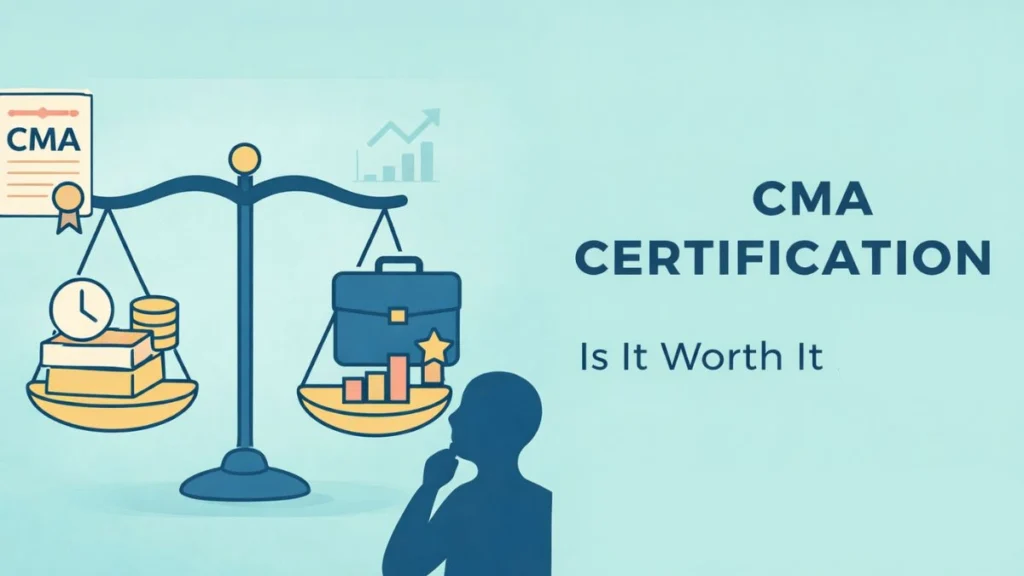
Is the CMA Exam Worth It?
For many professionals, yes.
The CMA exam is worth it if you:
- Want career growth
- Aim for leadership roles
- Enjoy analysis and strategy
- Want global recognition
It’s a long-term investment in your professional future.
Final Thoughts
The CMA Exam is more than a test—it’s a career-defining step for professionals who want to move beyond basic accounting into leadership and strategic roles.
With the right preparation, guidance, and mindset, passing the CMA exam is achievable and rewarding.
Frequently Asked Questions (FAQs)
What does CMA stand for?
CMA stands for Certified Management Accountant.
How many parts are in the CMA exam?
The CMA exam has two parts.
Can I take the CMA exam while working full-time?
Yes. Many candidates prepare while working.
Is the CMA exam difficult?
It is challenging, but passable with proper preparation.
How long does it take to complete the CMA exam?
Most candidates finish within 12–18 months.
Do I need accounting experience before the exam?
Experience is required for certification, but not before taking the exam.
Is the CMA exam recognized internationally?
Yes, it is globally recognized.
What is the passing score for the CMA exam?
The exam uses a scaled scoring system.
Can I retake the CMA exam if I fail?
Yes, you can retake failed parts.
Does the CMA exam help with salary growth?
Many CMA professionals report higher earning potential.