
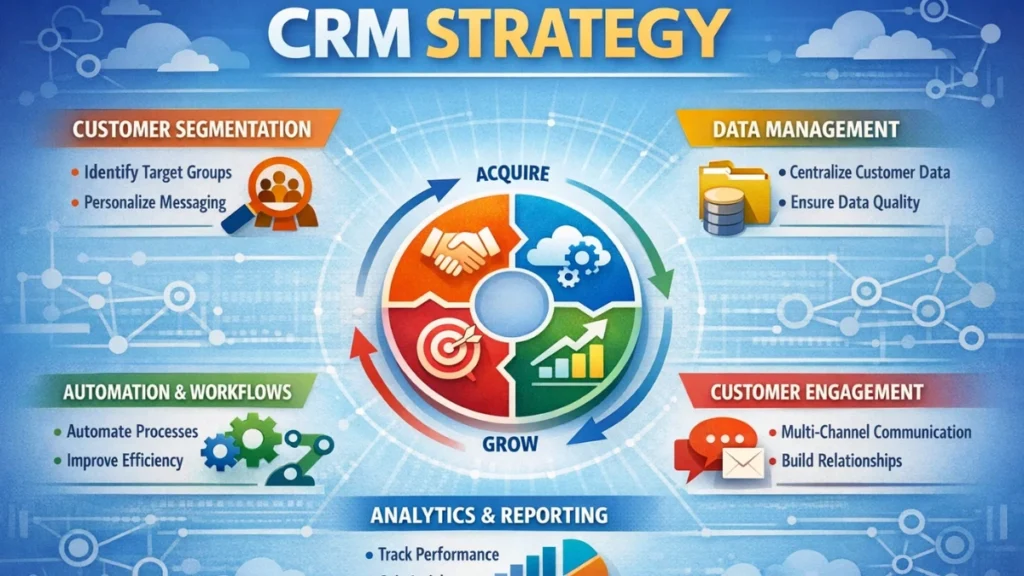

In today’s competitive business landscape, customer relationships are more valuable than ever. Companies that successfully manage and nurture these relationships can drive both sales growth and customer loyalty. This is where a well-planned Customer Relationship Management (CRM) strategy comes into play. But how do you build a CRM strategy that truly delivers results? Let’s explore.
Understanding CRM and Its Importance
Customer Relationship Management (CRM) refers to the practices, strategies, and technologies companies use to manage interactions with current and potential customers. The goal is to improve business relationships, streamline processes, and enhance profitability.
A robust CRM strategy provides:
- Better customer insights: Understand customer needs and behaviors through data.
- Improved communication: Tailor interactions for personalized experiences.
- Higher retention rates: Keep existing customers engaged and satisfied.
- Increased sales: Identify opportunities for upselling and cross-selling.
Steps to Build an Effective CRM Strategy
1. Define Your CRM Objectives
Start by establishing clear goals. Ask yourself:
- Do you want to increase sales or boost customer retention?
- Are you aiming to improve customer service or engagement?
- How will CRM support your overall business strategy?
Having specific, measurable objectives ensures your CRM strategy aligns with business priorities.
2. Know Your Customers
A deep understanding of your customers is crucial. Segment your audience based on:
- Demographics (age, gender, location)
- Buying behavior and purchase history
- Engagement patterns and preferences
Segmentation allows you to target marketing campaigns effectively and provide personalized experiences that resonate.
3. Choose the Right CRM Technology
Selecting the right CRM software is vital. Consider solutions that offer:
- Contact management
- Sales pipeline tracking
- Marketing automation
- Customer support ticketing
- Analytics and reporting
Popular CRM tools range from cloud-based platforms to more customizable enterprise solutions. Ensure the software integrates seamlessly with your existing systems.
4. Train Your Team
Even the best CRM system fails without proper adoption. Train your sales, marketing, and customer support teams to:
- Use the CRM efficiently
- Input and update customer data accurately
- Leverage analytics to make data-driven decisions
Continuous training keeps your team aligned with your CRM goals.
5. Personalize Customer Interactions
Personalization is the heart of modern CRM. Use customer data to:
- Recommend products or services
- Send personalized emails or messages
- Offer loyalty rewards based on purchase behavior
Personalized experiences increase engagement, trust, and brand loyalty.
6. Monitor Performance and Optimize
CRM strategy is not a set-and-forget process. Regularly monitor KPIs such as:
- Customer retention rate
- Customer lifetime value
- Conversion rates
- Sales growth per segment
Use these insights to refine your approach, improve campaigns, and identify new opportunities for growth.
7. Encourage Feedback and Engagement
Feedback loops are crucial for understanding customer satisfaction. Encourage customers to share their experiences through surveys, reviews, or social media engagement. This information helps refine your products, services, and customer interactions.
8. Align CRM with Marketing and Sales
A successful CRM strategy integrates with marketing and sales efforts. By sharing data between departments, you can:
- Identify hot leads faster
- Run targeted marketing campaigns
- Ensure consistent messaging across touchpoints
Alignment improves efficiency and creates a seamless customer journey.
Conclusion
Building an effective CRM strategy requires thoughtful planning, the right tools, and continuous optimization. By defining clear goals, understanding your customers, choosing the right technology, and personalizing interactions, businesses can drive both sales and loyalty. Remember, CRM is not just about managing data—it’s about nurturing relationships that last.
FAQs
1. What is the first step in creating a CRM strategy?
Define clear objectives that align with your overall business goals.
2. How does CRM improve customer loyalty?
CRM allows for personalized interactions, proactive support, and targeted engagement that enhance customer satisfaction.
3. Can small businesses benefit from CRM?
Yes, even small businesses can use CRM tools to organize contacts, track sales, and improve customer relationships.
4. What metrics should I track in CRM?
Key metrics include customer retention rate, conversion rates, customer lifetime value, and engagement levels.
5. How often should a CRM strategy be reviewed?
Review your strategy quarterly to ensure it adapts to customer behavior, business goals, and market trends.