
For businesses, managing customer relationships and operational data in separate systems can lead to inefficiencies, errors, and missed opportunities. Sales teams may not have visibility into inventory, finance, or delivery, while operations teams might lack customer context.
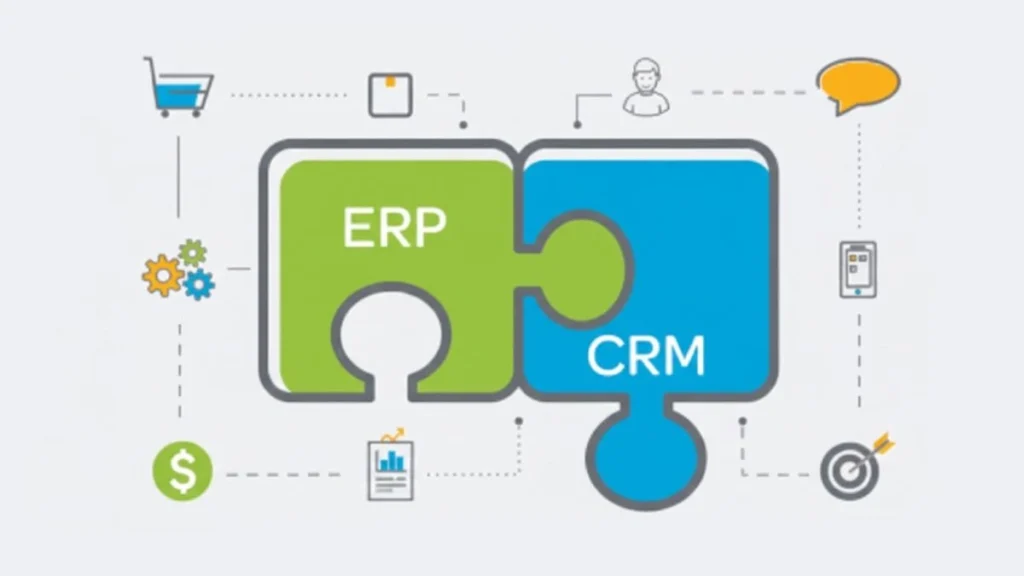
CRM + ERP Integration bridges this gap, connecting your Customer Relationship Management (CRM) system with your Enterprise Resource Planning (ERP) software. The result? A unified system where sales, finance, and operations collaborate seamlessly, improving efficiency, visibility, and customer satisfaction.
In this article, we’ll explore what CRM + ERP integration is, why it matters, how it works, and practical strategies for implementation.
What Is CRM + ERP Integration?
CRM (Customer Relationship Management) systems focus on managing leads, customers, sales pipelines, and marketing campaigns.
ERP (Enterprise Resource Planning) systems manage internal business processes such as finance, inventory, production, procurement, and supply chain.
Integration means connecting these systems so data flows seamlessly between them. For example:
- Sales reps see real-time inventory and pricing while creating quotes
- Finance teams automatically get updated invoicing and payment information
- Customer service can track orders, deliveries, and support tickets in one view
Essentially, CRM + ERP integration ensures all teams work from the same data for better decisions and faster processes.
Why CRM + ERP Integration Matters
- Improve Operational Efficiency
Eliminate manual data entry, reduce errors, and automate workflows across sales, finance, and operations. - Enhance Customer Experience
Sales and support teams have real-time access to inventory, order status, and billing, allowing them to respond faster and more accurately. - Gain Complete Business Visibility
Unified data provides insights into sales performance, customer behavior, revenue, and operational metrics in one place. - Increase Collaboration Between Teams
CRM + ERP integration breaks silos between departments, ensuring everyone works with the same information. - Faster Decision-Making
Real-time data empowers management to make informed decisions regarding pricing, inventory, customer segmentation, and sales strategy.
How CRM + ERP Integration Works
Step 1: Identify Integration Goals
Determine what business processes you want to connect. For example:
- Quote-to-cash process
- Inventory updates for sales
- Financial reporting and invoicing
Step 2: Map Data Flow
Decide which data should flow between systems:
- Customer data (contacts, accounts)
- Orders and invoices
- Product inventory and pricing
- Shipping and delivery status
Step 3: Choose Integration Method
- Native Integrations – Pre-built connectors provided by CRM or ERP vendors
- Middleware / iPaaS – Integration platforms like Zapier, MuleSoft, or Dell Boomi
- Custom API Integration – Tailored connections for unique business requirements
Step 4: Implement and Test
Test data synchronization, workflows, and error handling. Make sure updates in one system reflect accurately in the other.
Step 5: Monitor and Optimize
Continuously track integration performance, resolve errors, and improve workflows as your business grows.
Benefits of CRM + ERP Integration
- Real-Time Access to Customer & Operational Data – Sales, support, and finance see the same information instantly
- Streamlined Processes – From order creation to fulfillment, reduce manual steps
- Better Forecasting – Sales and operations can plan based on real-time inventory and order trends
- Improved Cash Flow Management – Automatic invoicing and payment tracking reduces delays
- Higher Customer Satisfaction – Faster responses, accurate orders, and personalized interactions
Popular Tools for CRM + ERP Integration
- Salesforce + SAP ERP – Widely used for enterprise-scale integration
- Microsoft Dynamics 365 CRM + ERP – Unified Microsoft ecosystem for sales, operations, and finance
- Zoho CRM + ERP Platforms (Odoo, SAP, etc.) – Affordable and flexible integration options
- HubSpot CRM + NetSuite ERP – Connect marketing, sales, and financial data seamlessly
- Oracle NetSuite + CRM Platforms – Enterprise-level integration for complex workflows
Common Use Cases
- Quote-to-Cash Automation – Generate accurate quotes, convert to orders, and process invoices automatically
- Inventory Visibility for Sales Teams – Check stock levels in real-time while talking to customers
- Customer Service Support – Access order, billing, and shipment info in one screen
- Financial Reporting – Consolidate revenue, sales, and operational metrics for better planning
- Subscription Management – Sync recurring billing and subscription data between CRM and ERP
Conclusion
CRM + ERP integration bridges the gap between customer-facing and operational systems, ensuring your teams have accurate, real-time, actionable data. This integration improves efficiency, enhances customer experience, reduces errors, and drives better business decisions.
For any business aiming to streamline operations and deliver exceptional customer service, connecting CRM and ERP is a must-have strategic move.
FAQs About CRM + ERP Integration
Q1: Do I need both CRM and ERP systems to integrate?
Yes, integration is meaningful when you have separate systems for customer management and operational processes.
Q2: Can small businesses benefit from CRM + ERP integration?
Absolutely. Even small teams benefit from automated workflows, accurate data, and improved customer visibility.
Q3: Is integration complicated?
It depends on the systems and method chosen. Pre-built connectors are easier, while custom API integrations require technical expertise.
Q4: Will it replace my current workflows?
No. Integration improves existing workflows by connecting them and automating repetitive tasks, not replacing your business processes.
Q5: How much time does it take to implement?
Small-scale integrations can take weeks, while complex enterprise-level setups may take months. Proper planning ensures smooth deployment.