
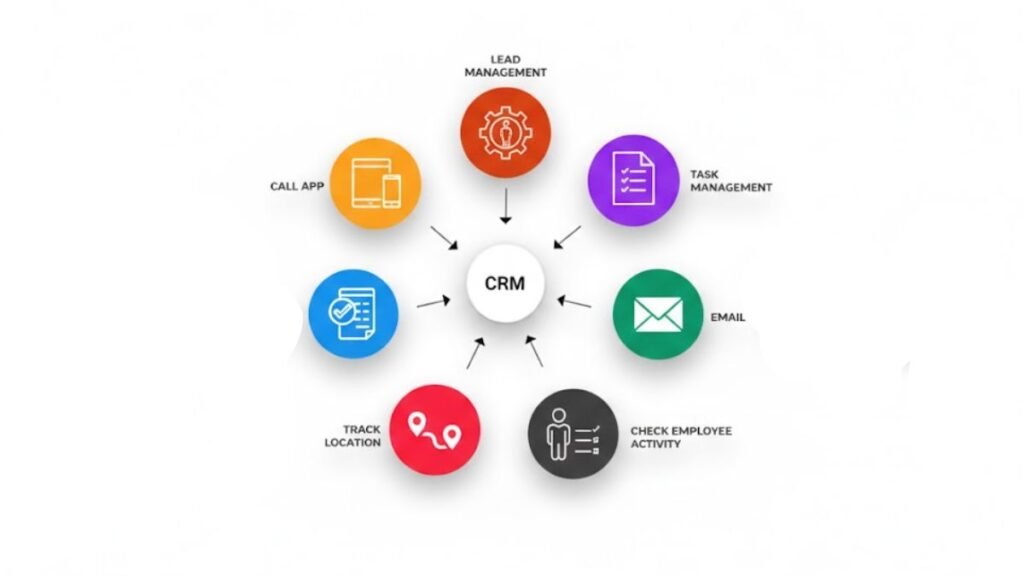

Managing customer relationships is crucial for every business, but building complex CRM workflows often feels like a job for developers. What if you could automate sales, marketing, and customer service processes without writing a single line of code?
Enter No-Code CRM Workflows. These tools allow businesses of all sizes to streamline operations, save time, and boost productivity—without needing a tech team. In this article, we’ll explore what no-code CRM workflows are, why they matter, and how you can use them to grow your business.
What Are No-Code CRM Workflows?
A CRM (Customer Relationship Management) workflow is a sequence of automated steps that guide leads, deals, and customer interactions through your business process. Traditionally, setting up these workflows required coding knowledge or relying on developers.
No-Code CRM Workflows remove that barrier. Using intuitive drag-and-drop interfaces, visual builders, and pre-built templates, you can:
- Automatically assign leads to your sales team
- Send personalized follow-up emails
- Update customer records in real-time
- Trigger notifications when certain actions occur
Simply put, no-code workflows let you automate repetitive tasks without technical expertise.
Why No-Code CRM Workflows Are Game-Changing
- Save Time and Reduce Errors
Manual tasks like data entry and follow-up emails take hours each week. No-code automation reduces human error and frees your team for higher-value work. - Boost Sales and Marketing Efficiency
Workflows can nurture leads automatically, ensuring every potential customer gets timely communication, increasing the chance of closing deals. - Enhance Customer Experience
Automated workflows make interactions seamless. Customers get instant responses, personalized emails, and consistent follow-ups. - Cost-Effective
Hiring developers for custom CRM automation can be expensive. No-code solutions allow businesses to implement sophisticated workflows at a fraction of the cost. - Easy to Modify and Scale
As your business grows, no-code workflows can be updated or expanded without complex coding, giving you flexibility and control.
Popular No-Code CRM Workflow Tools
Several platforms make creating no-code workflows simple:
- HubSpot CRM – Drag-and-drop workflow builder for sales, marketing, and service automation.
- Zoho CRM – Visual automation with triggers, alerts, and multi-step actions.
- Salesforce Flow – Powerful automation with a no-code interface for enterprise-scale workflows.
- Pipedrive – Easy-to-use pipeline automation for small and medium businesses.
- Monday.com CRM – Combines project management and CRM workflow automation in a visual interface.
Each tool has its strengths, but all make it possible to design workflows without coding knowledge.
How to Set Up No-Code CRM Workflows
Step 1: Identify Your Processes
List tasks that are repetitive or time-consuming, like:
- Sending welcome emails to new leads
- Following up on quotes
- Updating deal stages in your CRM
Step 2: Choose the Right Tool
Select a no-code CRM platform that matches your business size, budget, and integration needs.
Step 3: Map Out Your Workflow
Visualize the steps a lead or customer takes. For example:
- Lead fills out a form → 2. Lead is assigned to sales rep → 3. Welcome email is sent → 4. Follow-up reminder is created
Step 4: Automate and Test
Use the platform’s drag-and-drop builder to create triggers, actions, and conditions. Test the workflow to ensure it runs smoothly.
Step 5: Monitor and Optimize
Check analytics regularly to see how your workflows are performing. Adjust steps to improve efficiency and conversions.
Best Practices for No-Code CRM Workflows
- Start Small – Automate one process at a time to avoid overwhelming your team.
- Personalize Where Possible – Use dynamic fields to personalize emails and messages.
- Keep Workflows Simple – Complex workflows can be hard to maintain. Simpler flows often perform better.
- Integrate with Other Tools – Connect your CRM with email, chat, or marketing tools for seamless automation.
- Track Results – Regularly review KPIs like response time, lead conversion rate, and customer satisfaction.
Common Use Cases
- Lead Nurturing – Automatically send targeted emails to leads based on their behavior.
- Customer Support – Trigger notifications when support tickets are submitted or updated.
- Sales Follow-Up – Remind sales reps to follow up at key stages of the deal.
- Marketing Campaigns – Automatically segment and target customers based on engagement.
- Subscription Renewal – Alert customers and sales teams about upcoming renewals.
FAQs About No-Code CRM Workflows
Q1: Can small businesses benefit from no-code workflows?
Absolutely. Even small teams can automate repetitive tasks, saving hours every week and improving customer engagement.
Q2: Do I need technical skills to use them?
No. Most platforms offer drag-and-drop builders and templates that are easy to use.
Q3: Are no-code workflows secure?
Yes, reputable CRM platforms follow strict security protocols. Always check data privacy and compliance policies.
Q4: Can I integrate no-code CRM workflows with other software?
Yes. Most tools support integrations with email, chat, marketing automation, and analytics platforms.
Q5: How much time can I save?
Depending on the complexity and number of workflows, businesses often save 20–40% of time spent on repetitive tasks.
Conclusion
No-code CRM workflows are revolutionizing the way businesses manage customer relationships. By automating repetitive tasks, enhancing efficiency, and improving customer experiences, any business can stay competitive without hiring a team of developers.
Whether you’re a small startup or a growing enterprise, no-code workflows let you focus on what matters most—building relationships and growing revenue. Start small, experiment, and watch your business processes transform with minimal effort.