
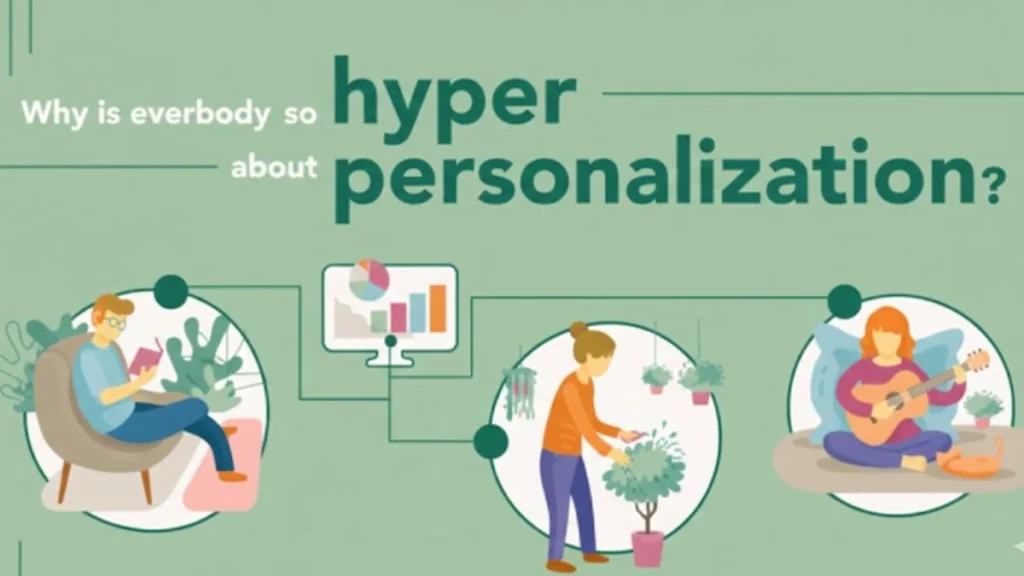

Customers no longer respond to generic messages. They expect brands to understand their needs, preferences, and timing. Hyper-personalization takes customer engagement to the next level by delivering highly relevant, real-time experiences based on individual behavior and data.
It’s not about adding a name to an email—it’s about meaningful, one-to-one interactions.
What Is Hyper-Personalization?
Hyper-personalization is the use of real-time data, artificial intelligence, and behavioral insights to deliver highly tailored content, offers, and experiences to each individual customer.
It considers factors such as:
- Browsing behavior
- Purchase history
- Location and device
- Preferences and intent
- Timing and context
Every interaction feels timely and relevant.
Hyper-Personalization vs Personalization
Traditional personalization:
- Uses basic data (name, location)
- Relies on fixed rules
- Feels generic
Hyper-personalization:
- Uses real-time behavioral data
- Adapts dynamically
- Feels personal and natural
It’s the difference between “Hello, John” and “Here’s exactly what you need right now.”
Why Hyper-Personalization Matters
Hyper-personalization helps businesses:
- Increase engagement
- Improve conversion rates
- Build customer loyalty
- Reduce churn
- Strengthen brand trust
Customers are more likely to respond when they feel understood.
How Hyper-Personalization Works
Hyper-personalization combines:
- Customer data from multiple sources
- AI and machine learning
- Predictive analytics
- Automation
The system analyzes behavior and delivers the most relevant message or action at the right moment.
Key Elements of Hyper-Personalization
Real-Time Data
Up-to-date insights drive accurate personalization.
Behavioral Insights
Understanding what customers do, not just who they are.
AI-Driven Decisions
AI determines what content or offer works best.
Omnichannel Delivery
Consistent personalization across email, web, apps, and ads.
Hyper-Personalization in Marketing
Marketing teams use hyper-personalization to:
- Deliver tailored email campaigns
- Customize website experiences
- Show relevant ads
- Optimize messaging by behavior
This leads to higher engagement and better ROI.
Hyper-Personalization in Sales
Sales teams benefit by:
- Understanding customer intent
- Offering relevant solutions
- Timing outreach perfectly
Every conversation becomes more meaningful.
Hyper-Personalization in Customer Experience
Customer experience improves through:
- Personalized onboarding
- Proactive support
- Relevant recommendations
Customers feel valued, not targeted.
Hyper-Personalization in CRM Systems
Modern CRM platforms are integrating hyper-personalization using AI and data intelligence. Platforms like Salesforce enable businesses to personalize customer journeys at scale across multiple touchpoints.
Benefits of Hyper-Personalization
Key advantages include:
- Higher conversion rates
- Improved customer satisfaction
- Better retention
- More efficient marketing spend
- Stronger brand relationships
It turns data into meaningful experiences.
Challenges of Hyper-Personalization
Some common challenges include:
- Data privacy concerns
- Data quality issues
- Technology integration
- Over-personalization risk
Responsible data use is essential.
Hyper-Personalization and Data Privacy
Trust matters. Businesses must:
- Be transparent about data usage
- Follow data protection laws
- Give customers control
Ethical personalization builds long-term loyalty.
Who Should Use Hyper-Personalization?
Hyper-personalization is ideal for:
- E-commerce brands
- SaaS companies
- Financial services
- Travel and hospitality
- Media and content platforms
Any business focused on customer experience can benefit.
Why Hyper-Personalization Is the Future
As competition increases, relevance becomes the key differentiator. Hyper-personalization allows brands to:
- Stand out
- Build emotional connections
- Deliver value at the right time
It’s no longer optional—it’s expected.
Final Thoughts
Hyper-Personalization transforms customer engagement from generic to meaningful. By using data responsibly and intelligently, businesses can create experiences that customers truly value.
Frequently Asked Questions (FAQs)
What is hyper-personalization in simple terms?
It delivers highly tailored experiences using real-time data.
Is hyper-personalization the same as personalization?
No, it’s more advanced and dynamic.
Does hyper-personalization require AI?
Yes, AI enables real-time decisions at scale.
Is hyper-personalization expensive?
Costs vary, but ROI is often high.
Can small businesses use hyper-personalization?
Yes, many tools are scalable.
Is customer data safe?
Yes, when privacy best practices are followed.
Does hyper-personalization increase conversions?
Yes, significantly.
Can hyper-personalization feel intrusive?
Only if done without transparency and consent.
Is hyper-personalization used across channels?
Yes, it works across digital touchpoints.
Is hyper-personalization growing?
Yes, adoption is increasing rapidly.